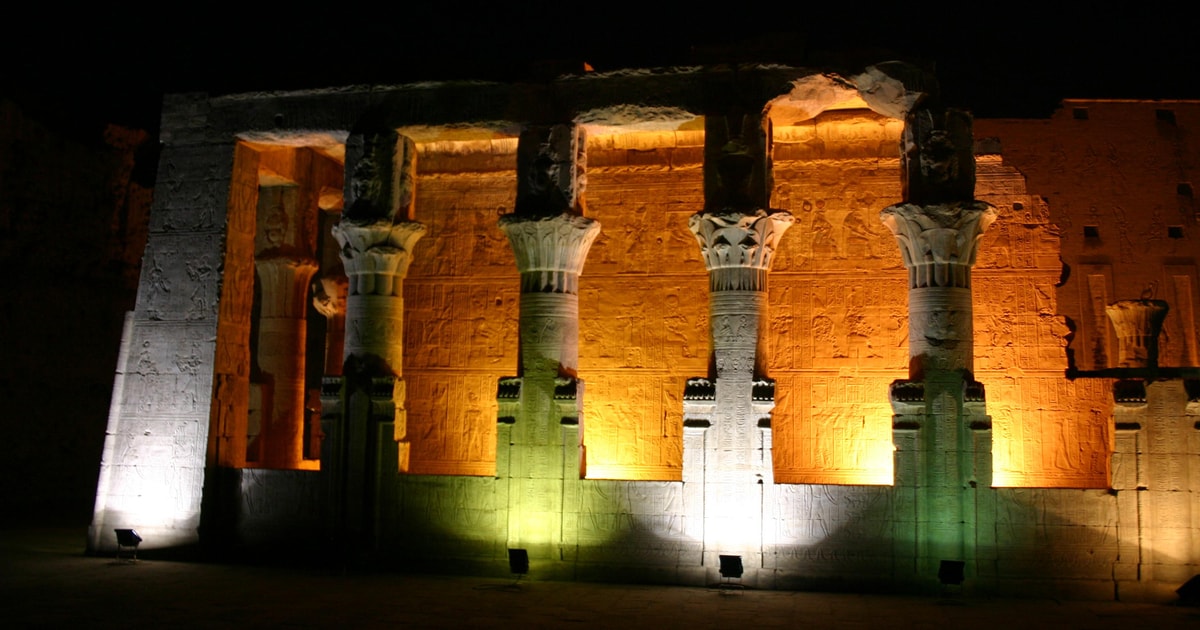
The short answer
Is the Karnak sound and light show worth it?
Yes for most first-time visitors, as a second look at Karnak rather than the only one. The booking page describes light and narration inside the temple after dark, with a private air-conditioned car, entry, a guide and water included, and the 77 reviews so far average 4.1. Skip it if you mainly want to read the carvings up close, or if Luxor gets only one free day in your plans.
Six things to know before you choose
It is a private tour
The listing is sold by a Luxor operator as a private tour, so the car and guide are yours alone. That suits families and mixed-age groups, and it is not the shared product a cheaper group ticket would be.
Language and date go together
The show runs in set languages at set hours. Pick the night in the calendar by the language you need, and move the date if it does not match.
It is an evening, not a daytime visit
Lit stone and narration give atmosphere more than close study. The carvings of the Great Hypostyle Hall are easier to read in daylight, so do both if you can.
The rating is shown as it stands
A 4.1 from 77 reviews is a fair mark on a small sample. It sits below the large daytime Luxor tours, and the guides here explain why that gap does not decide the question.
Tips and meals are extra
Neither is part of the tour. A booking made on GetYourGuide can be dropped at no cost until a day before the start.
Read the temple first
A few minutes with the guides below on the hall, the precinct and the avenue of sphinxes makes the narration far easier to follow.
Seven layers beneath the lights
Seven layers of Karnak, from its first stones to the night lights
The temple lit after dark is the work of roughly thirty pharaohs over some two thousand years. These seven panels set out the layers a narrator has to choose among, in the order they were laid down.
-
The name · Ancient Egypt
The most select of places
Wikipedia records that the ancient name of Karnak was Ipet-isut, meaning the most select of places, and that the modern name comes from the nearby village of El-Karnak. It was the main place of worship of the Theban triad, headed by the god Amun, whose own name means hidden.
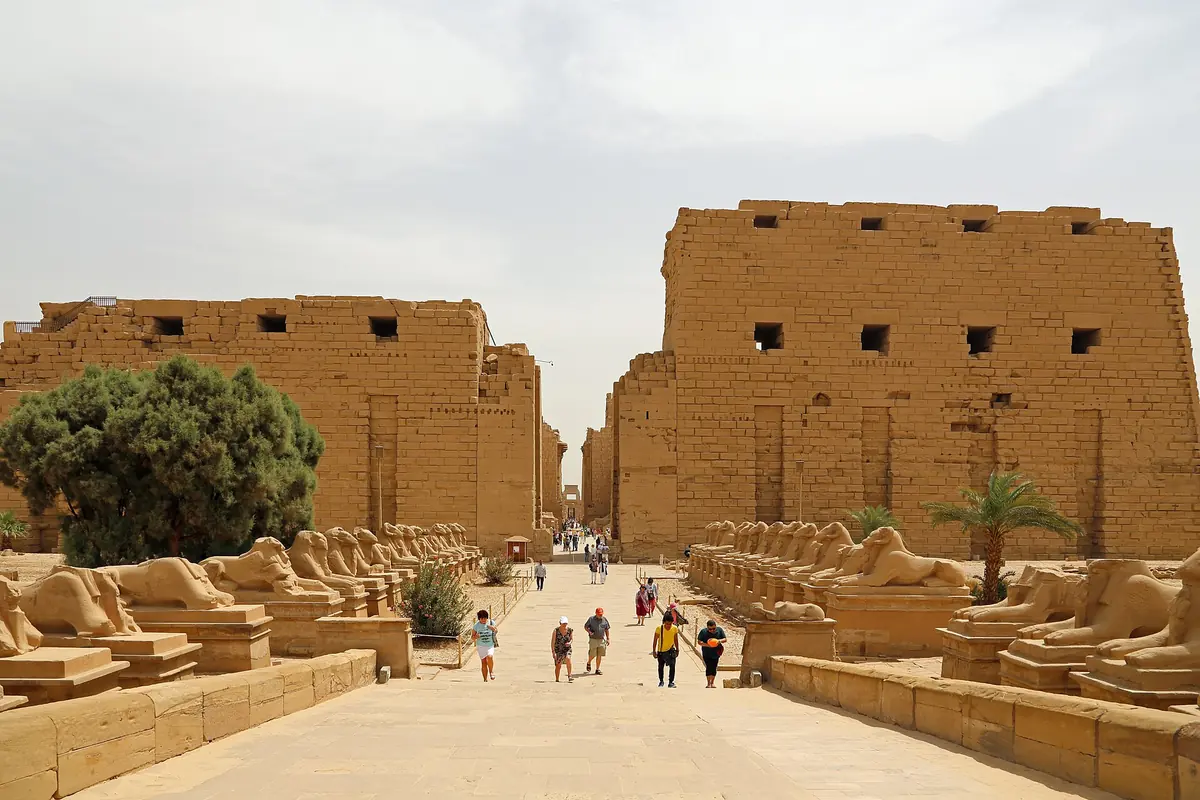
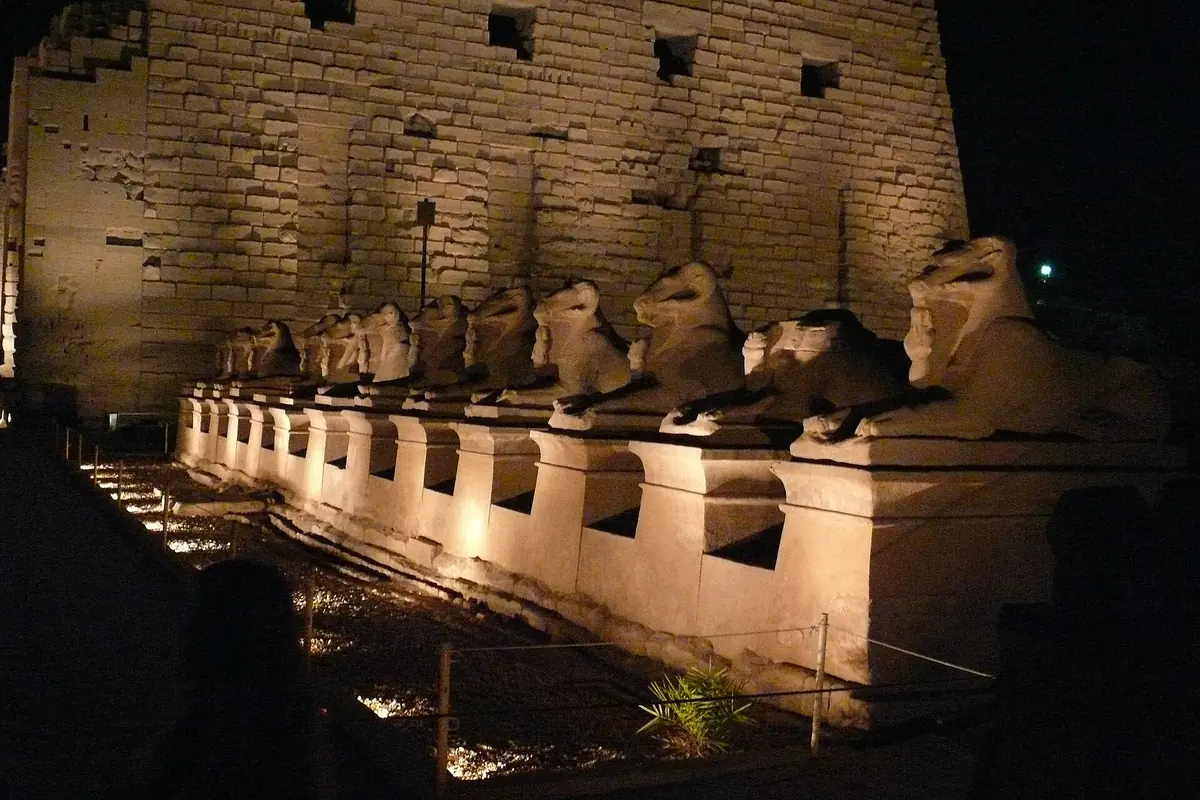
The First Pylon and the ram-headed sphinxes by day. -
The first stones · Middle Kingdom
Building begins under Senusret I
The earliest construction at the complex dates to the reign of Senusret I, who ruled from 1971 to 1926 BCE. Wikipedia notes that the earliest known artefact in the area is a small eight-sided column from the Eleventh Dynasty that mentions Amun-Re.
-
A capital's temple · 18th Dynasty
Thebes becomes the centre
When Thebes became the capital of unified Egypt, almost every pharaoh of the 18th Dynasty added something. Thutmose I's enclosure wall between the Fourth and Fifth Pylons is the oldest part still standing in place.
-
The obelisks · 18th Dynasty
Hatshepsut raises two needles of stone
Hatshepsut had twin obelisks set up at the entrance, then the tallest in the world. One still stands as the second-tallest ancient obelisk on Earth; the other lies broken.
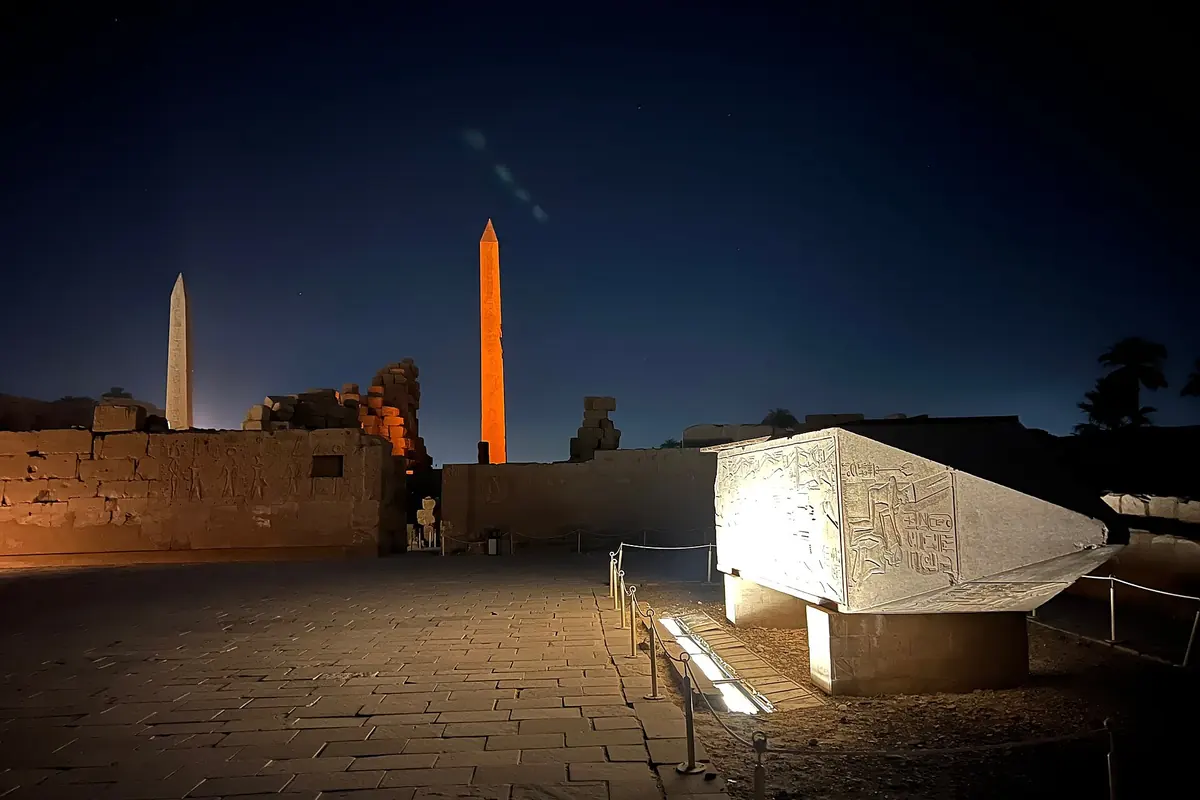
A standing obelisk and a fallen one at night. -
The grove of columns · 19th Dynasty, c. 1290 to 1224 BCE
A stone marsh of 134 columns
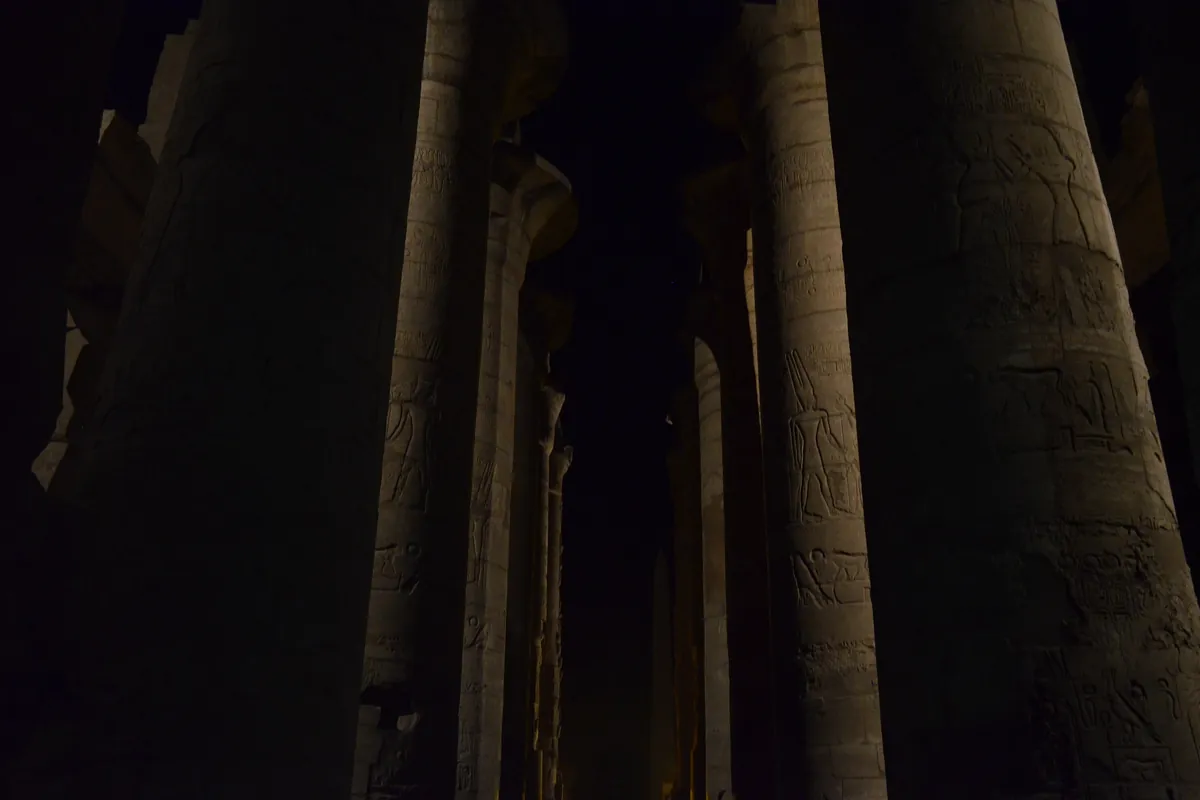
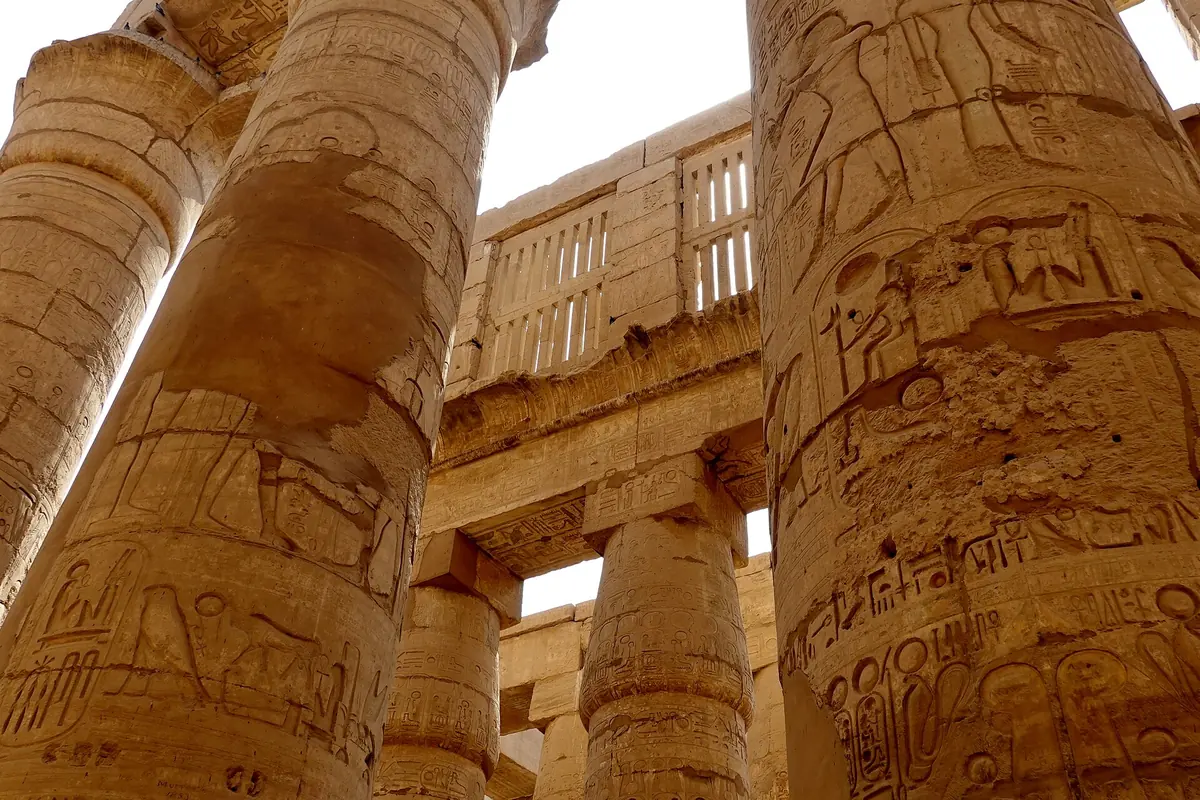
The Great Hypostyle Hall covers 5,000 square metres and held 134 columns in 16 rows. Built mainly under Seti I and finished by Ramesses II, it stands for the primeval papyrus swamp of creation.
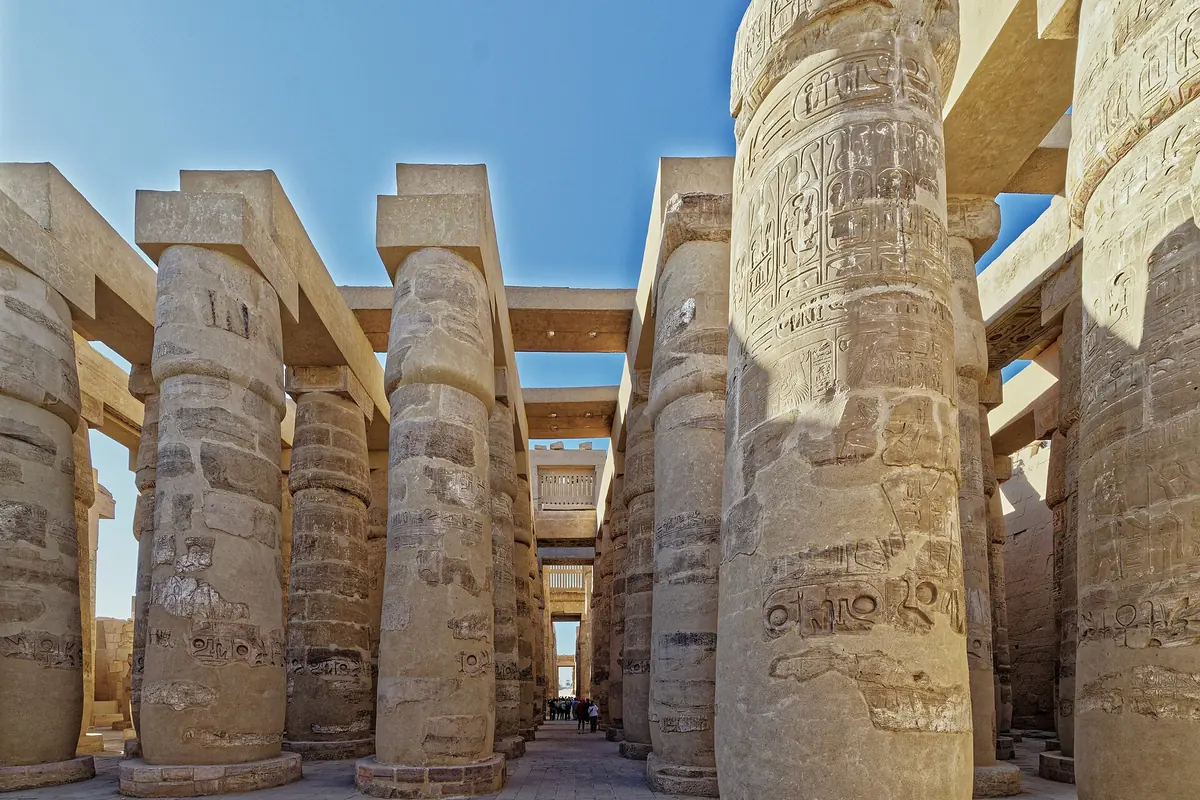
The Great Hypostyle Hall in daylight. -
Pylons and water · Through the New Kingdom
Ten gateways, shrines and a sacred lake
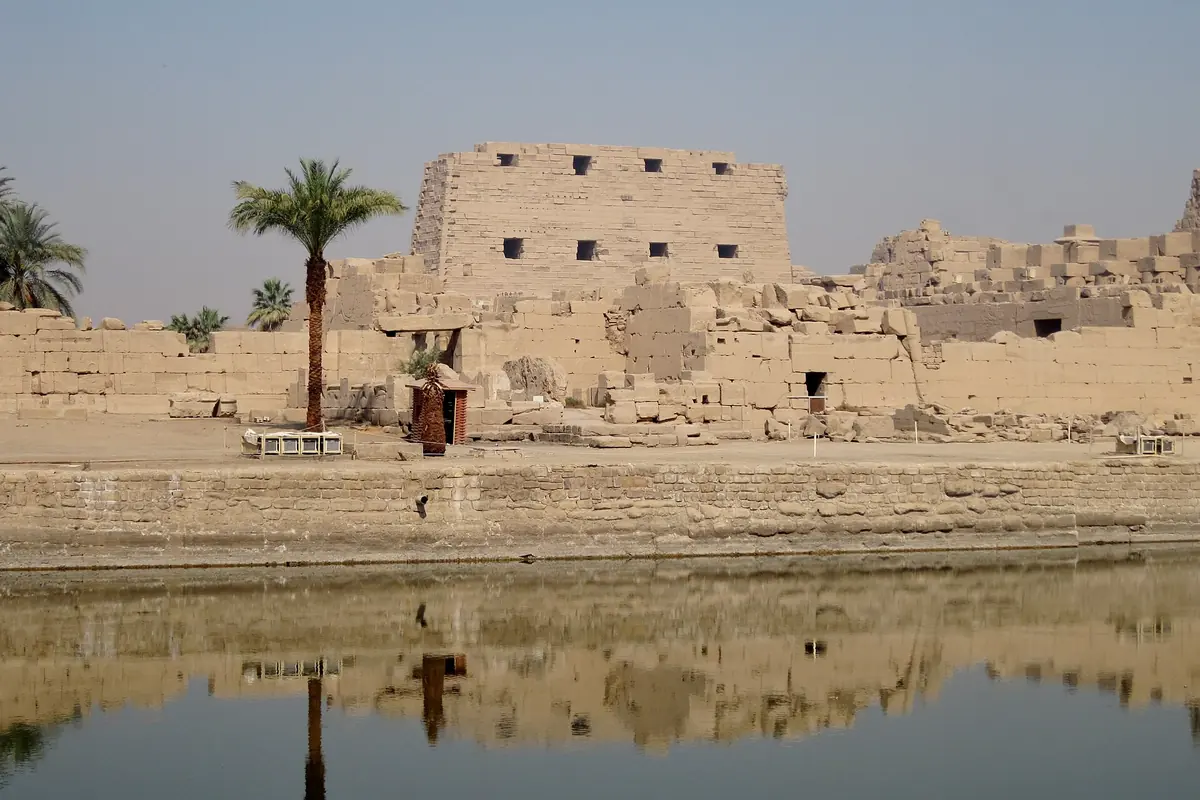
Wikipedia's account of Thebes lists the temple's main features as ten large pylons, the great hall, a sacred lake, sub-temples, shrines and obelisks. The lake and the dark mirror it makes are part of the scenery after sunset.
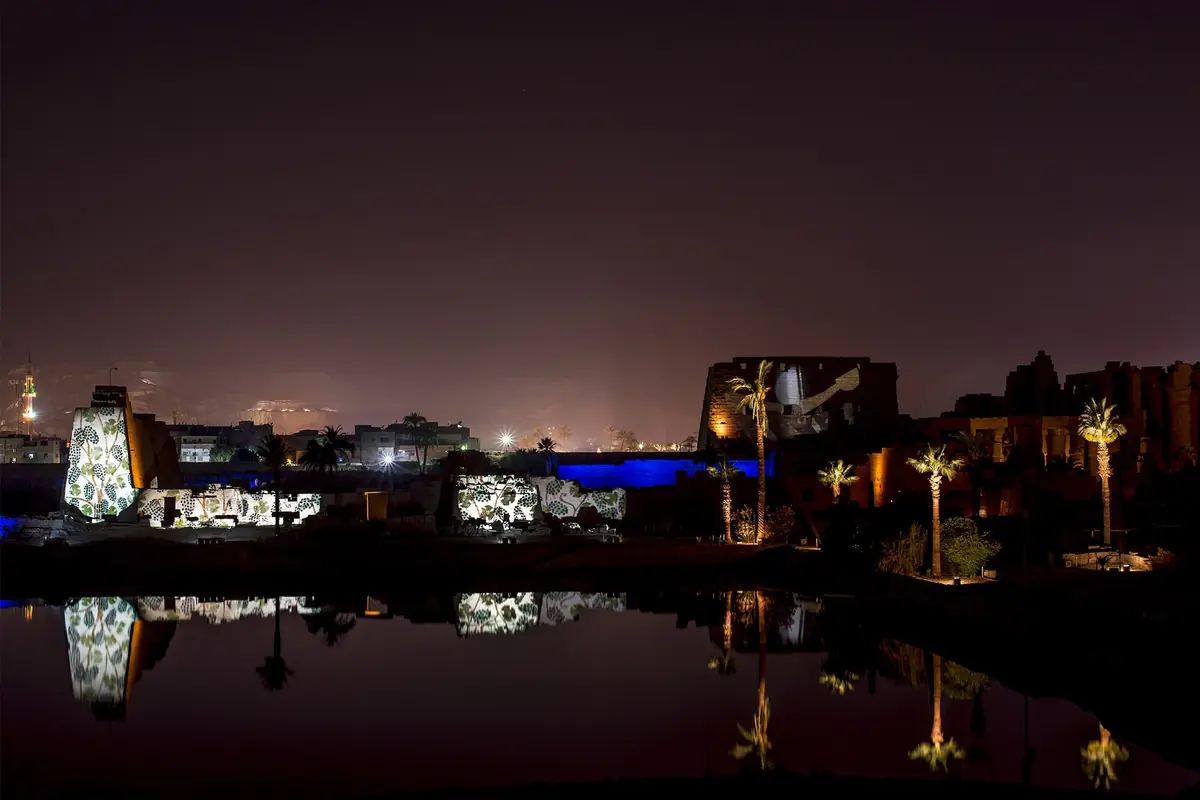
The water at Karnak mirrors the lights after sunset. -
After the pharaohs · Late antiquity to today
Churches, collapse and repair
Karnak was largely abandoned by the Roman era, and Christian churches were founded among the ruins. Eleven hall columns fell in 1899 and were rebuilt by 1902; the whole of ancient Thebes was added to the UNESCO World Heritage List in 1979.
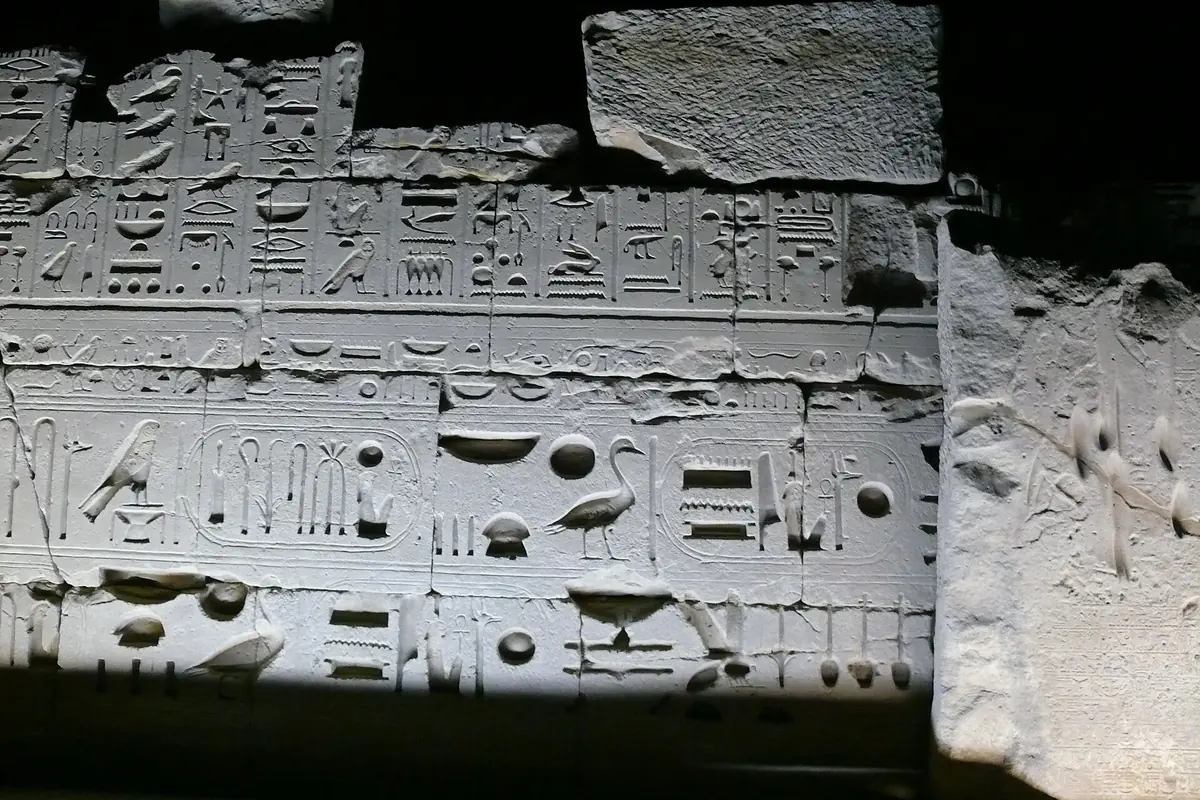
Carved hieroglyphs picked out by night lighting.
These panels explain the setting rather than describe the running order of a particular evening; the booking page gives no route, and none is invented here. Dates are those given by Wikipedia and the sources at the foot of each guide.
Five places, five dates
Five places around the evening, each with a date
From the tour's listing
As the listing describes it
Eight points taken from the booking page on 18 November 2026. Where the page is silent, this guide says so and does not fill the gap.
- The tour
- Light and narration in Karnak Temple at night, sold by a Luxor operator as a private tour.
- The site
- Karnak is part of the UNESCO-listed ancient city of Thebes with its necropolis.
- Transport
- A private air-conditioned car takes you from your Luxor accommodation and brings you back.
- Entry
- Entry fees to the temple are included in the tour.
- Guide
- A guide in Arabic, English, Spanish, Russian or German accompanies you.
- Water
- Bottled water is included.
- Not included
- Tips and meals are not part of the tour, so plan for them yourself.
- Length and cancellation
- The outing takes about two hours, and a GetYourGuide booking can be cancelled free of charge until a day ahead.
Prices follow the currency you pick on GetYourGuide, and the final charge matches the number shown there.
Lit stone or a view from the sky
Karnak by night or a balloon over Luxor at dawn?
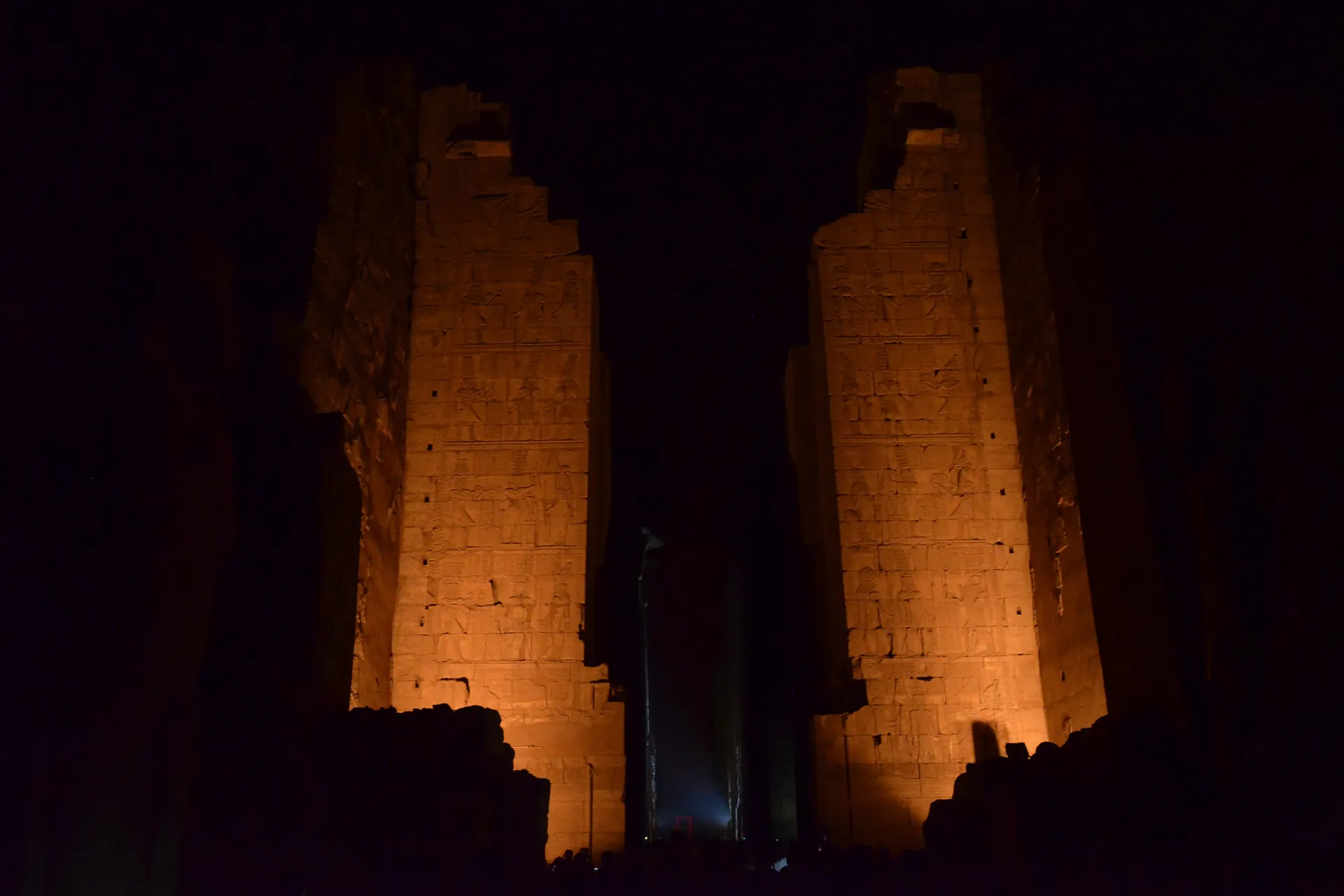
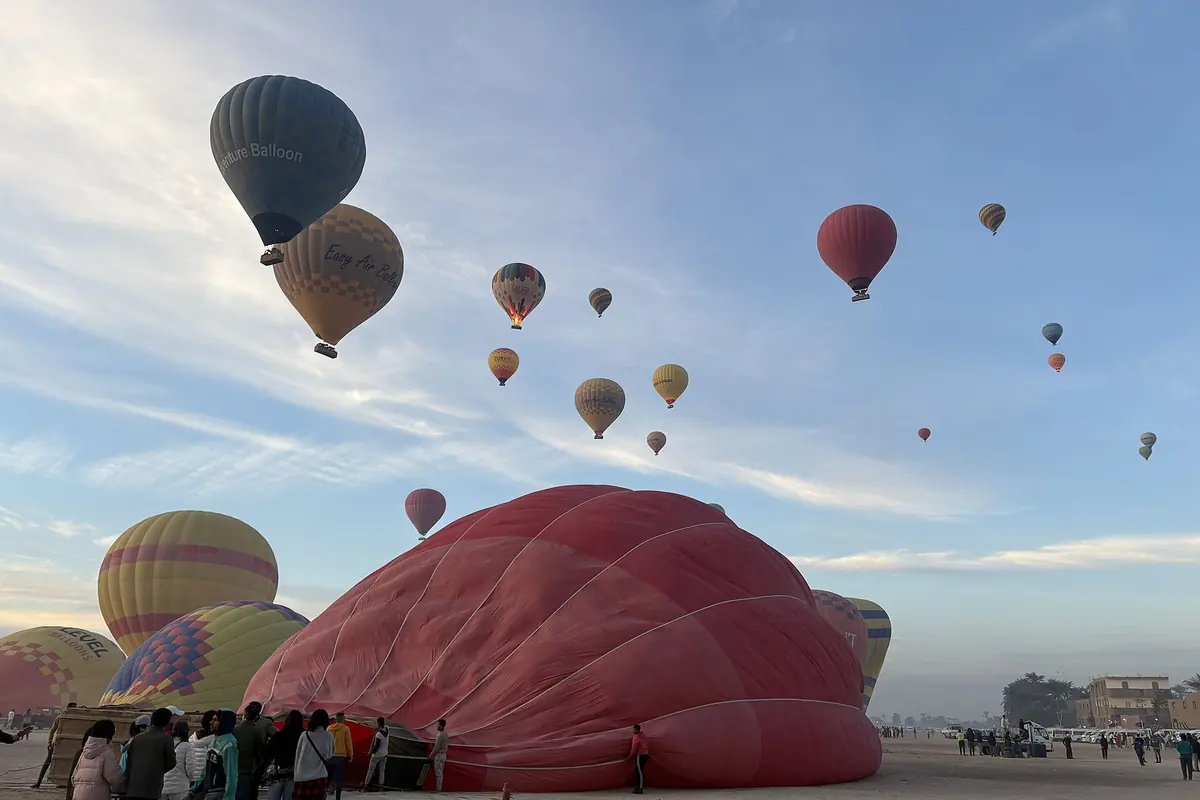
The temple at night, or another way to spend Luxor
Other Luxor tickets worth setting beside it
An evening at Karnak fills about two hours after sunset. A balloon at dawn, a day among the royal tombs or a long walk through both river banks each ask for something different, so set the options side by side before you give up an evening.
- See this tour ↗
Karnak sound and light evening, private tour
About two hours of light and narration inside the temple after dark, with a private air-conditioned car, entry and a guide included.
- See this tour ↗
Hot air balloon over Luxor's monuments
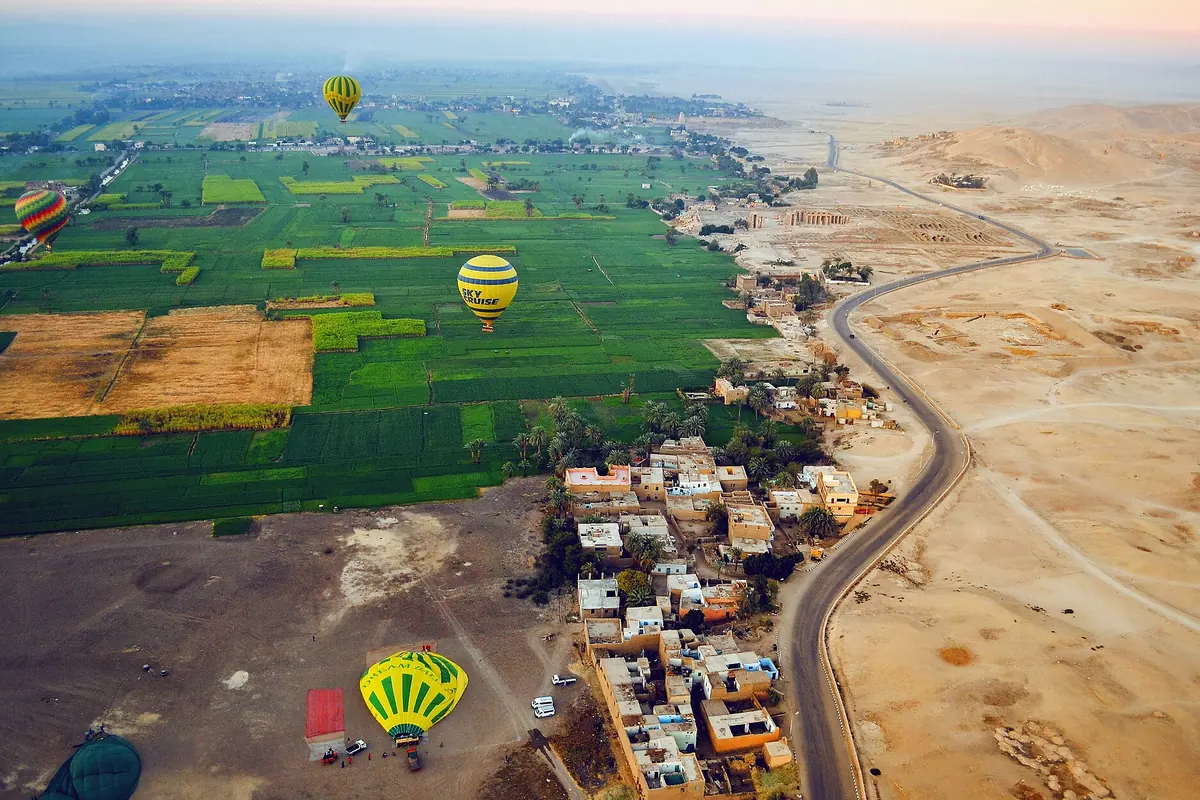
An early-morning flight above the west bank, taking in the Colossi of Memnon, the Valley of the Kings and Hatshepsut's temple from the air.
- See this tour ↗
Valley of the Kings and Hatshepsut Temple
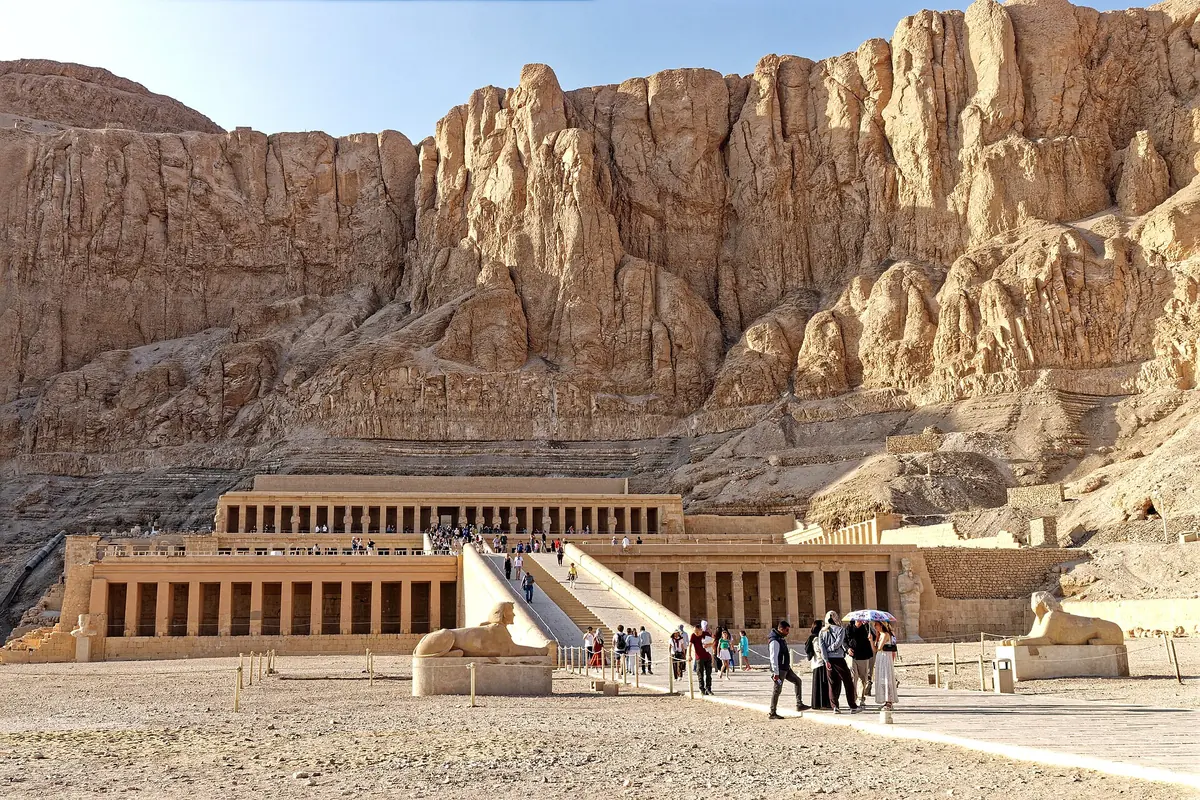
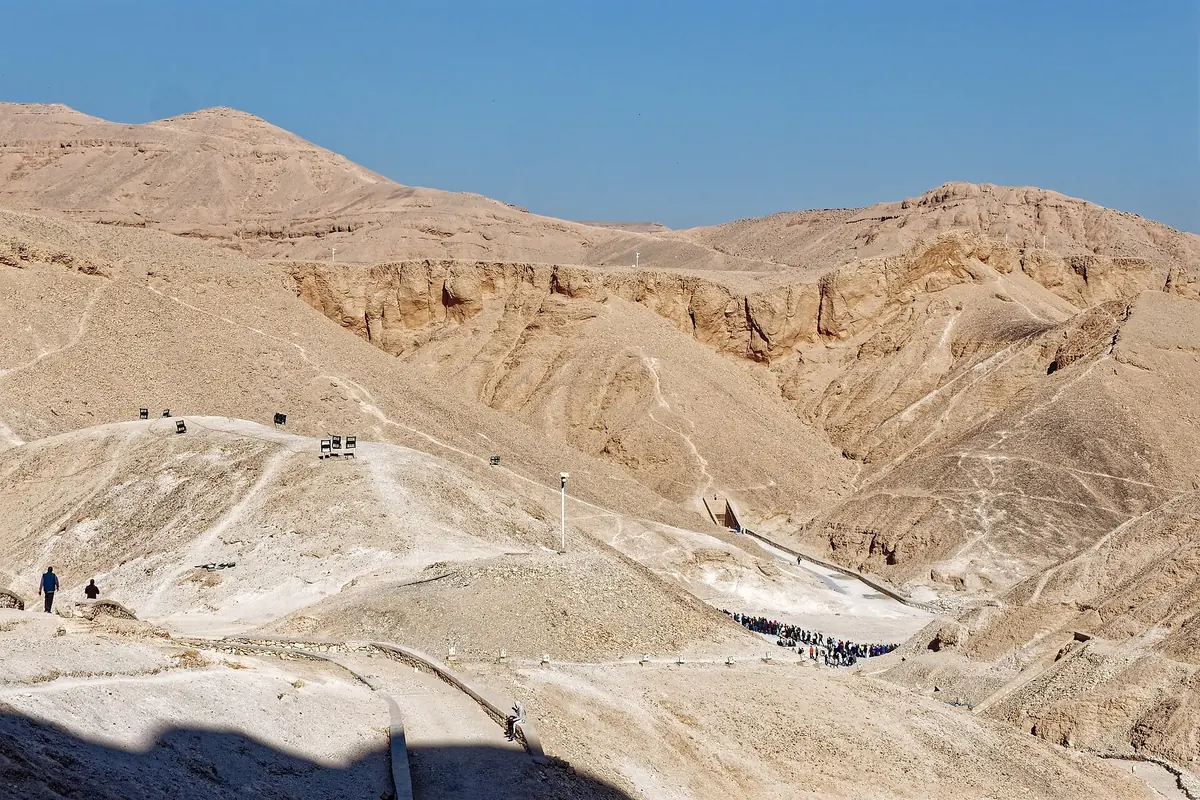
A guided shared tour of the west bank, walking into the royal tombs and up to the terraced temple at Deir el-Bahari.
- See this tour ↗
Full-day tour of the West and East Banks
A long shared day with an Egyptologist guide, covering Karnak, the Valley of the Kings and Hatshepsut's temple in one sweep.
Also on offer in Luxor
Four choices before the car arrives
Four choices before the car arrives
Choose the language first
Open the calendar, pick a date and confirm the language that runs that night. Change the date, not your expectations, if it does not match.
See Karnak by day if you can
Daylight lets you read the carvings and understand the layout. The evening then feels like a second look, not a first.
Settle meals and tips
Neither is included. Decide where you will eat and bring small notes for the driver and guide.
Go easy the next morning
Keep the day after a late outing free of early starts, unless a balloon flight is the point of it.
Columns, lakes and the river valley around them
Columns, lakes and the river valley around them
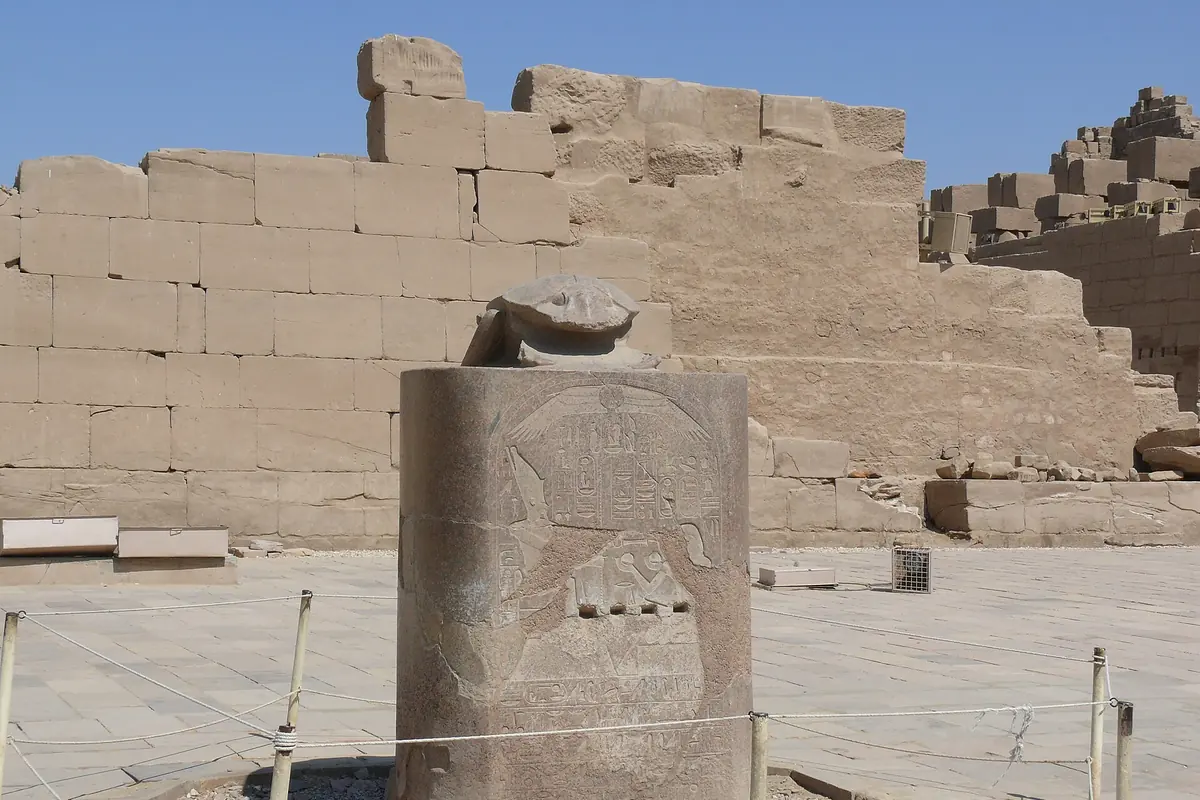
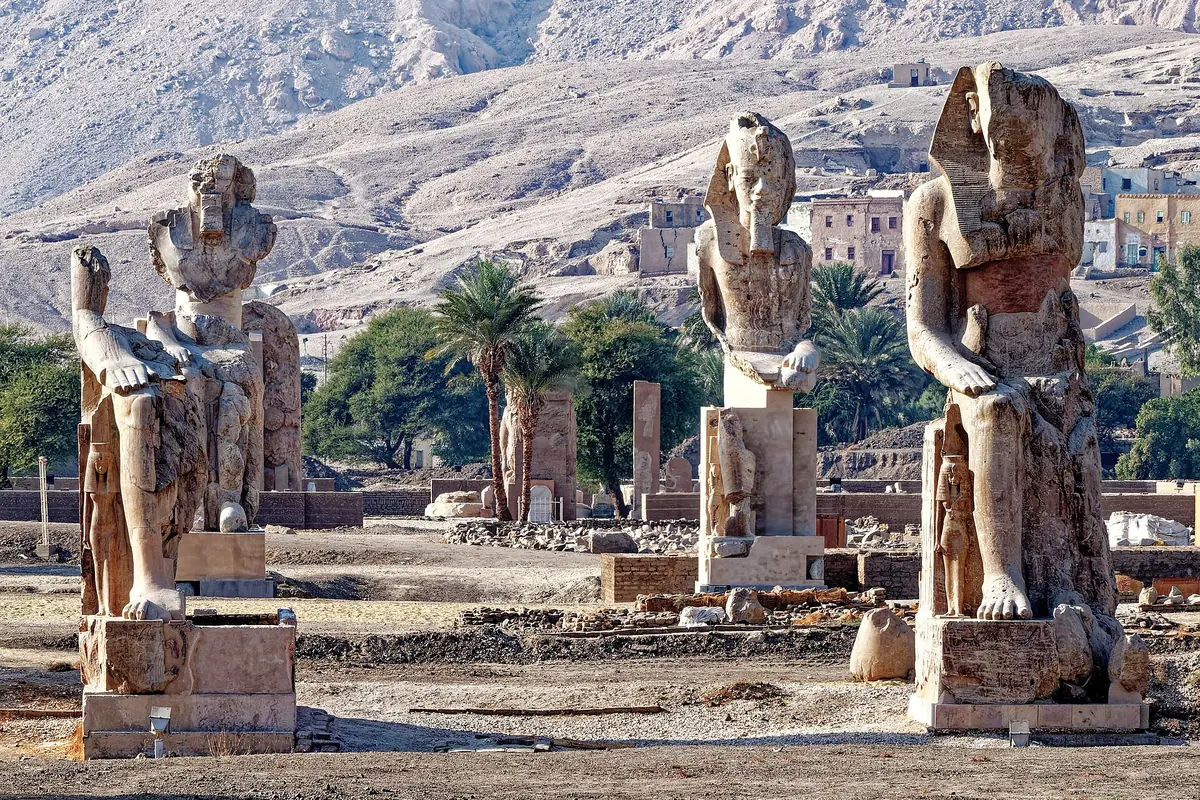
Wikimedia Commons photographs of Karnak by night and by day, of the avenue to Luxor Temple, and of the west bank and its balloons, to show what the evening sits among.
Longer reading
Reading before you go
- The short answer Is the Karnak sound and light show worth it? A direct answer on an evening of light and narration at Karnak, sold with private transfers and a guide: what the booking page promises, what 77 reviews suggest, and who should choose a daytime visit instead. Open the guide →
- Night or dawn Karnak by night or a balloon over Luxor at dawn? Two ways to meet ancient Thebes: a lit temple after dark with private transfers, or an early flight above the west bank. How they differ in view, effort, weather risk and rating. Open the guide →
- The hall The Great Hypostyle Hall: 134 columns and how they stood The room at the heart of a Karnak evening: who built it, why it is a forest of stone papyrus, how a chain reaction brought eleven columns down in 1899 and what the carvings record. Open the guide →
- The temple The precinct of Amun-Re: two thousand years of building What Karnak is, who added what, and why the temple you see after dark is a layered record of roughly thirty pharaohs rather than a single design. Open the guide →
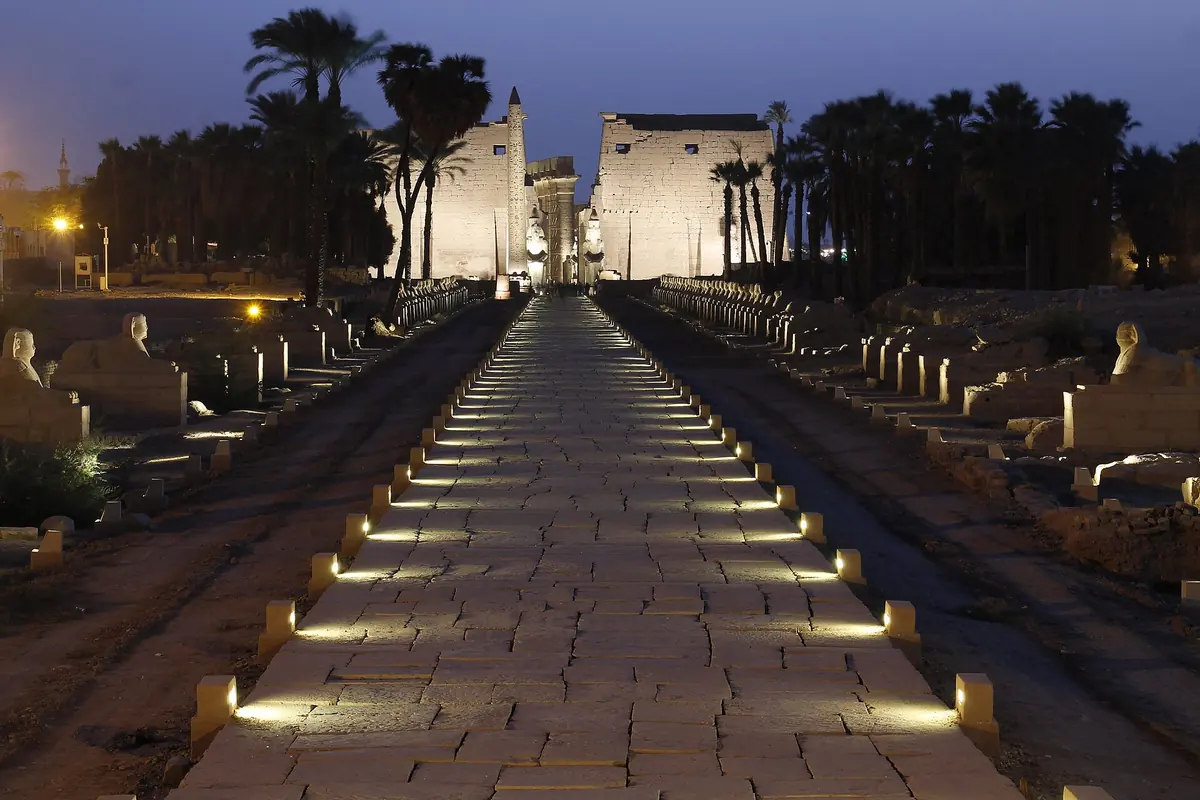
- The road The avenue of sphinxes: from Karnak to Luxor Temple The ceremonial road that once linked two great temples, how it was uncovered, and why Luxor's lit avenue makes a good companion to a night at Karnak. Open the guide →
- On the day Karnak after dark: before you go Practical points for the evening show: private transfers, guide languages, what is and is not included, clothing, pace and the questions to settle on the booking calendar. Open the guide →
FAQ
Questions travellers ask first
Is the Karnak sound and light show worth it?
For most first-time visitors, yes, as a second Karnak visit. The booking page describes light and narration in the temple after dark with a private car, entry and a guide, and reviewers average 4.1 across 77 ratings. Carving enthusiasts and travellers with a single Luxor day may be better served by a daytime visit.
Is it a private tour?
Yes. The listing is sold by a Luxor operator as a private tour, with a private air-conditioned car to and from your Luxor accommodation.
What is included?
Entry fees, a guide, bottled water and the private transfers. Tips and meals are not included.
Which languages are offered?
The guide speaks Arabic, English, Spanish, Russian or German. The show itself runs in set languages at set hours, so check the language of your date in the calendar.
How long is the whole tour?
The booking page gives about two hours for the tour as a whole; the lit show is one part of that, and your confirmation carries the schedule.
Can I cancel?
Yes, without charge until 24 hours ahead, provided you booked through GetYourGuide.
Is it better than visiting Karnak by day?
They suit different aims. Daylight lets you read the carvings and see the layout; the evening gives atmosphere and narration. Many travellers do both.
Why is the rating 4.1?
It is the average of 77 reviews on GetYourGuide, a small sample for an atmospheric evening. The comparison guide explains how to read it.
How does it compare with a balloon flight?
A balloon shows the whole west bank from above at dawn; the evening puts you among the lit stone. The flight is rated 4.8 from 1,927 reviews and depends on wind.
What is the Great Hypostyle Hall?
The great columned hall at Karnak, covering 5,000 square metres with 134 columns in 16 rows, built mainly under Seti I and Ramesses II around 1290 to 1224 BCE.